01SHARED PORT, TRACEABLE I/O
Share the port.
Trace agent reads and writes.
Use the same connections. Serial I/O retains source and time, and MCP calls leave a record. Follow your agent’s operations and look back at device responses.
02PERSISTENT, AGENT-FRIENDLY LOGS
Keep the logs.
Query them when needed.
Captured RX/TX, system, MCP, and flash events persist locally. Your agent reads the relevant devices, sessions, and cursors, then waits for fresh output—without manual log dumps.
03FIRMWARE HISTORY, VERSIONED
Archive every flash.
Keep reusable versions.
Retain complete image packages and automatically group flash records beneath them. Supply a Git commit and note to trace source and firmware versions, then reflash saved artifacts later.
Explore firmware versions ↓
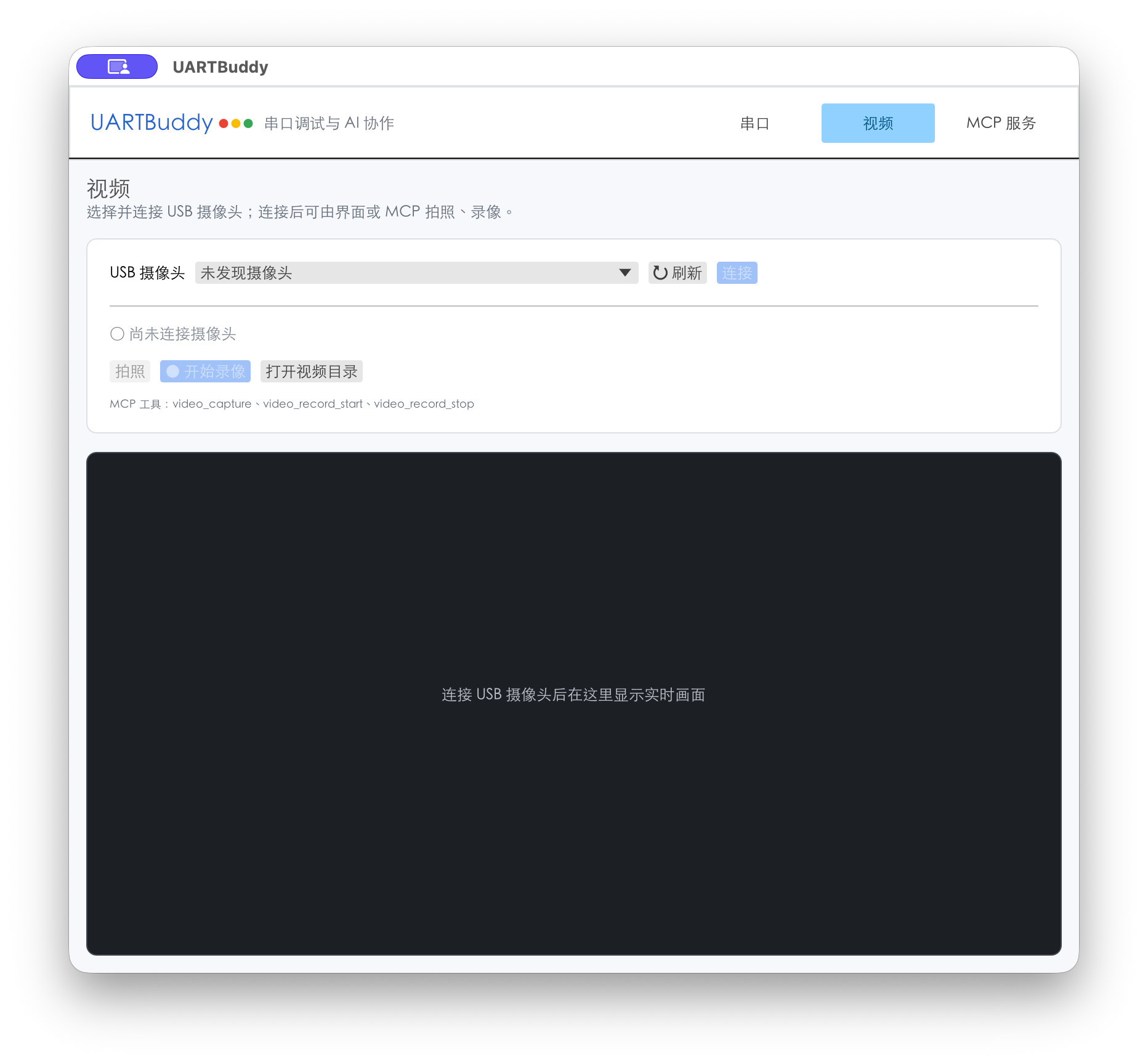
04CAMERA IN THE LOOP
Connect the camera.
Complete the physical context.
Request captures through MCP and combine the scene with serial responses, firmware provenance, and logs. Image-capable agents with access to capture files can inspect the results.
05ONE MCP CONNECTION
One MCP configuration.
The whole debugging workspace.
Reach serial I/O, log queries, flashing, historical firmware, and camera operations through one service. No separate service setup per tool; the app, hardware permissions, and runtime dependencies must still be ready.
Configure MCP ↓